
Exploring the Challenging Nature of Olympic Level Sport Climbing
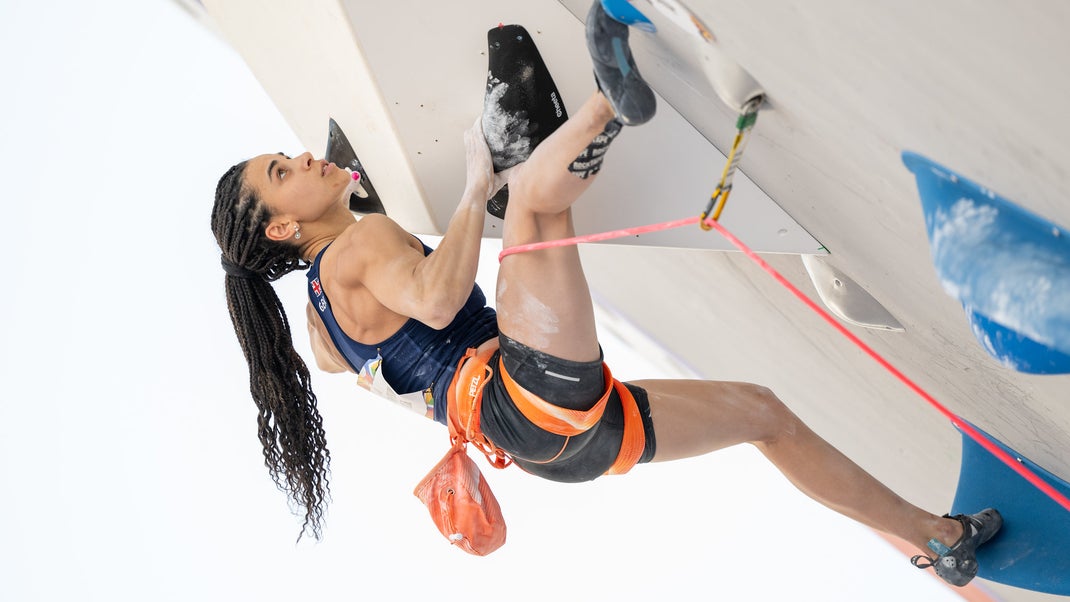
To get a better sense of the true demands of competitive sport climbing, I spoke with Garrett Gregor, the head boulder route setter for the upcoming Paris Olympics. Gregor, who has 25 years of professional route-setting experience with both USA Climbing and the International Federation of Sport Climbing, including work on the Tokyo 2020 setting team, is eager to dispel any misconceptions. "There is this notion that maybe these routes aren't that hard, maybe they're just 'showy' or whatever, and I would like to dispel any myths about that," Gregor stated firmly. "These routes are incredibly difficult."
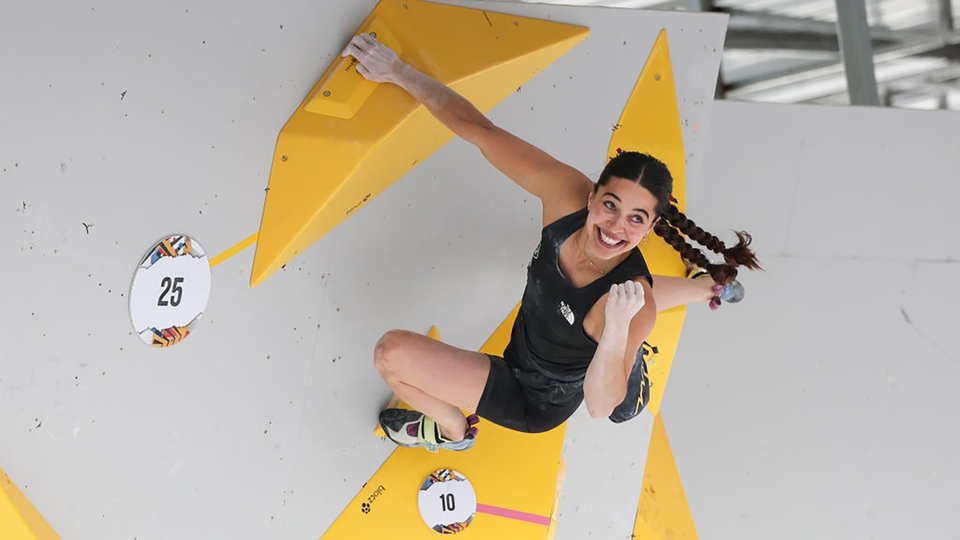
Sending climbs in the V9 to V14 difficulty range is an impressive feat for anyone, but it becomes even more remarkable when considering the time constraints these elite athletes face. In the semifinal rounds, climbers must attempt to solve four unannounced boulder problems, each within a five-minute time limit. The finals introduce a slight change, providing a two-minute preview of the four boulder problems, but the time limit remains at four minutes per problem.
Gregor explained that while the final boulders may be slightly more complex and visually challenging due to the preview, the semifinal problems are actually harder overall. This is because the semifinal boulders are specifically designed to be more difficult in order to thin out the field and determine who advances to the finals. Additionally, in the event of a tie, judges will look back to the semifinal performances to determine the winner, further emphasizing the greater difficulty of those problems.
Setting the Stage for Olympic Bouldering
The process of constructing boulder problems for the Olympics is not drastically different from the approach used at World Cup events, according to Garrett Gregor. Gregor, the head boulder routesetter for the Paris Olympics, and his team will arrive at the competition venue about a week in advance to spend a day or two refining each stage of the event through a trial-and-error process.
While all the boulder problems are designed and built before the competition begins, Gregor explained that the team remains adaptable and open to adjustments, even after the semifinal rounds. They monitor how the athletes perform and may make strategic tweaks to the final problems as needed.
Gregor emphasized that detailed advanced planning is challenging, as the available holds are shared between the boulder and lead climbing teams, so the full inventory is not always guaranteed. "If you did plan that way, by the time you get onto the wall, you might realize, 'Oh, that didn't work quite as I thought it did.' So the best thing a route setter can do is be adaptable."
Routesetting is a collaborative, fluid process, Gregor said, more akin to "jazz" than a strictly structured endeavor. "You riff off one another," he explained.
The four boulder problems in each round are each designed to target a specific skill set - one technically demanding, one requiring power, one focused on coordination, and one Gregor describes as "electric," calling for dynamic movement out of a static position. While the problems may not be exclusively limited to a single style, the overall "theme" of each boulder is intended to differ, with all four guiding principles represented.
The goal is not for every problem to be completed, Gregor noted. For lead climbing, the aim is to create a route where only one person can reach the top. In bouldering, the ideal is for one competitor to top all four problems, or come very close to that mark.
Olympic boulder route setters must adhere to a number of guidelines to ensure the safety and fairness of the competition. First and foremost, they are prohibited from including any downward jumps in the problems, as these carry a high risk of injury for the athletes.
More broadly, Garrett Gregor emphasized that the setters must "always have the athlete's safety in mind" when designing the problems. This manifests in various ways, such as avoiding cracks that could trap competitors' feet and lead to dangerous falls, and limiting the use of moves like kneebars that could potentially cause bleeding.
Another key rule is that the setters cannot incorporate any visual "designs" on the wall that could be construed as carrying ideological or political meaning. Gregor cited the example of a controversy that arose at the Tokyo Olympics, where a boulder problem was perceived by some as depicting the "rising sun" flag associated with Imperial Japan. This was not the intent, but it nevertheless caused an uproar, leading the Paris 2024 team to be especially vigilant about avoiding any recognizable patterns or symbols in their problem designs.
Gregor stressed that the priority is to create a neutral, safe environment where the athletes' skills and abilities can be fairly evaluated, free from potential controversies or distractions. The route-setting process requires constant consideration of these guidelines, even as the setters strive to design innovative and challenging problems for the competitors.
Contrary to what one might expect, Olympic bouldering routers do not need to be able to complete every move of the problems they design from start to finish. As Garrett Gregor explained, the reality is that setter abilities and athlete abilities can often diverge in unpredictable ways.
Gregor noted that sometimes a move that no setter could do might end up being sent by multiple competitors during the actual competition. Conversely, a move that the setters felt was straightforward could prove surprisingly difficult for the athletes. Given the incredible levels of performance at the Olympic level, it would be unrealistic to expect the setters to be able to replicate the competitors' feats.
Additionally, Gregor emphasized that the process of refining and finalizing a boulder problem is arduous, with "ups and downs" that make it impractical to demand full completion from the setters. The priority is crafting challenges that push the athletes' abilities, not necessarily matching them.
Gregor also highlighted some of the unique considerations for the Olympic setting compared to typical IFSC events. There is a need to balance accessibility for a broader viewing audience, not just hardcore climbers. The combined format, where athletes compete across both bouldering and lead climbing, also requires a different approach compared to single-discipline events.
The Tokyo Olympics in particular presented an added layer of complexity, with Speed climbing still part of the combined format. For Paris 2024, the separation of Speed into its own medal event has allowed the bouldering and lead setters to focus more narrowly on those two disciplines.
Ultimately, Gregor's perspective underscores that the Olympic route setting is a nuanced process, balancing athlete ability, spectator experience, and the demands of the competition format. Setter completion of every move is neither a realistic nor a necessary requirement.
Gregor, who coached several members of the U.S. Olympic climbing team, highlighted three crucial pieces of advice for climbers qualified for the Olympics:
1. Be Prepared
Gregor emphasized that there are many external factors at the Olympics that are beyond an athlete's control. Therefore, the focus should be on what can be controlled - namely, one's own training and preparation. This means diligently honing both physical skills and technical abilities, and ensuring you have everything you need when you step onto the competition mats.
2. Stay Present
Gregor noted that the immense pressure of the Olympic stage, even without live spectators as in Tokyo, can be deeply felt by the athletes. His advice is to resist getting swept away by the magnitude of the moment and instead remain focused and grounded in the present. The more an athlete can stay in the here and now, the better they'll be able to perform without getting caught up in self-doubt.
3. Embrace the Experience
Finally, Gregor's third tip is to simply enjoy the incredible opportunity of competing at the Olympics. He recognizes that this kind of achievement is fleeting, so he encourages athletes to soak it all in. Performing at this elite level is an incredible accomplishment in itself, so Gregor advises Olympians to savor the experience rather than get bogged down by the pressure.
By emphasizing preparation, presence, and enjoyment, Gregor provides a holistic framework for Olympian climbers to maximize their performance and fully appreciate the life-changing experience of representing their country on the biggest stage.


